Xwejni Bay, Marsalforn – Traditional Salt Harvesting in Gozo
📍 Location
The coordinates of Xwejni Salt Pans are:
Location Map Coordinates 36.079839, 14.246090
Location: Xwejni Bay, Marsalforn, Gozo, Malta
Coordinates: 36.079839, 14.246090
Type: Traditional coastal salt pans
Introduction
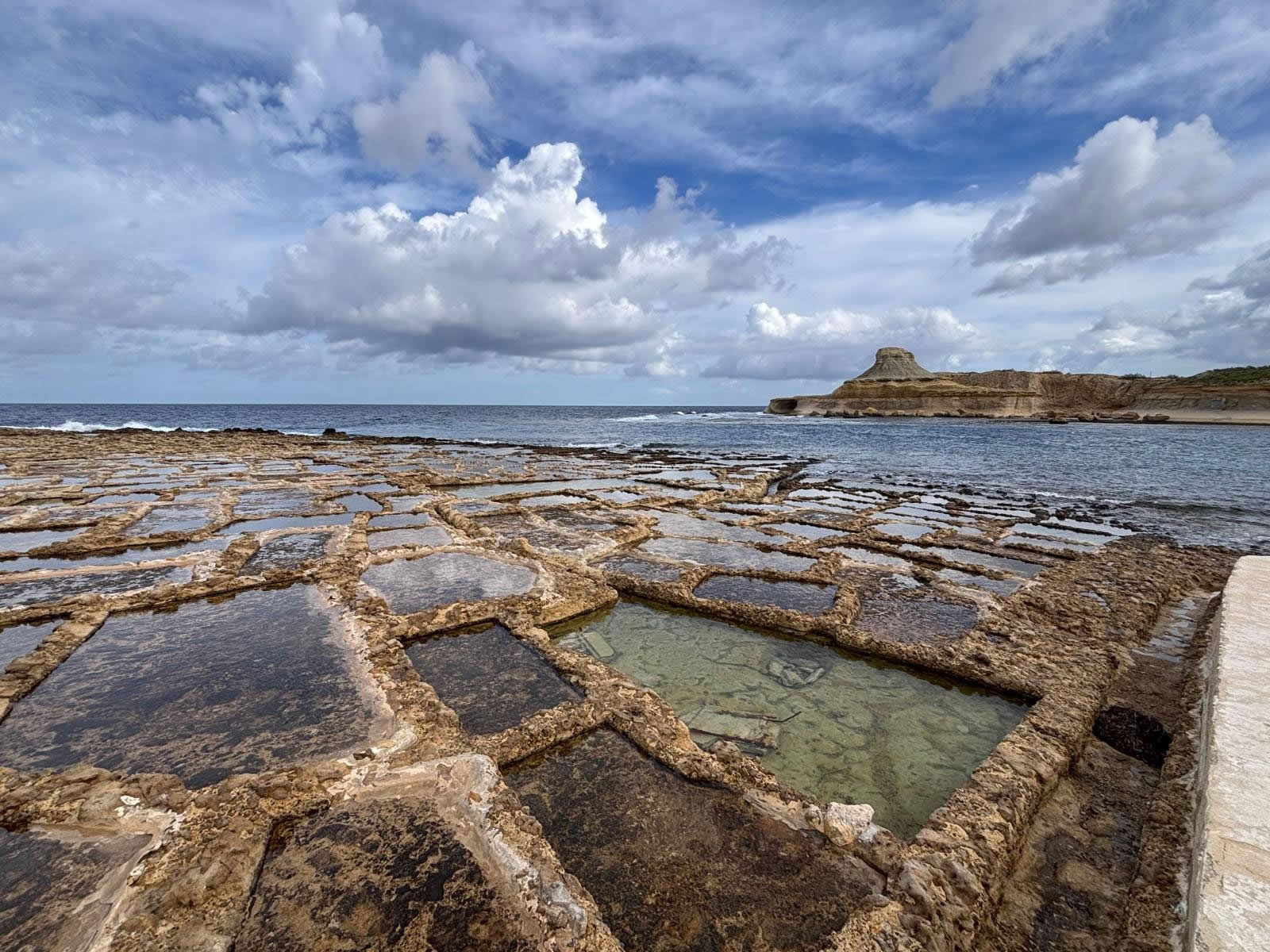
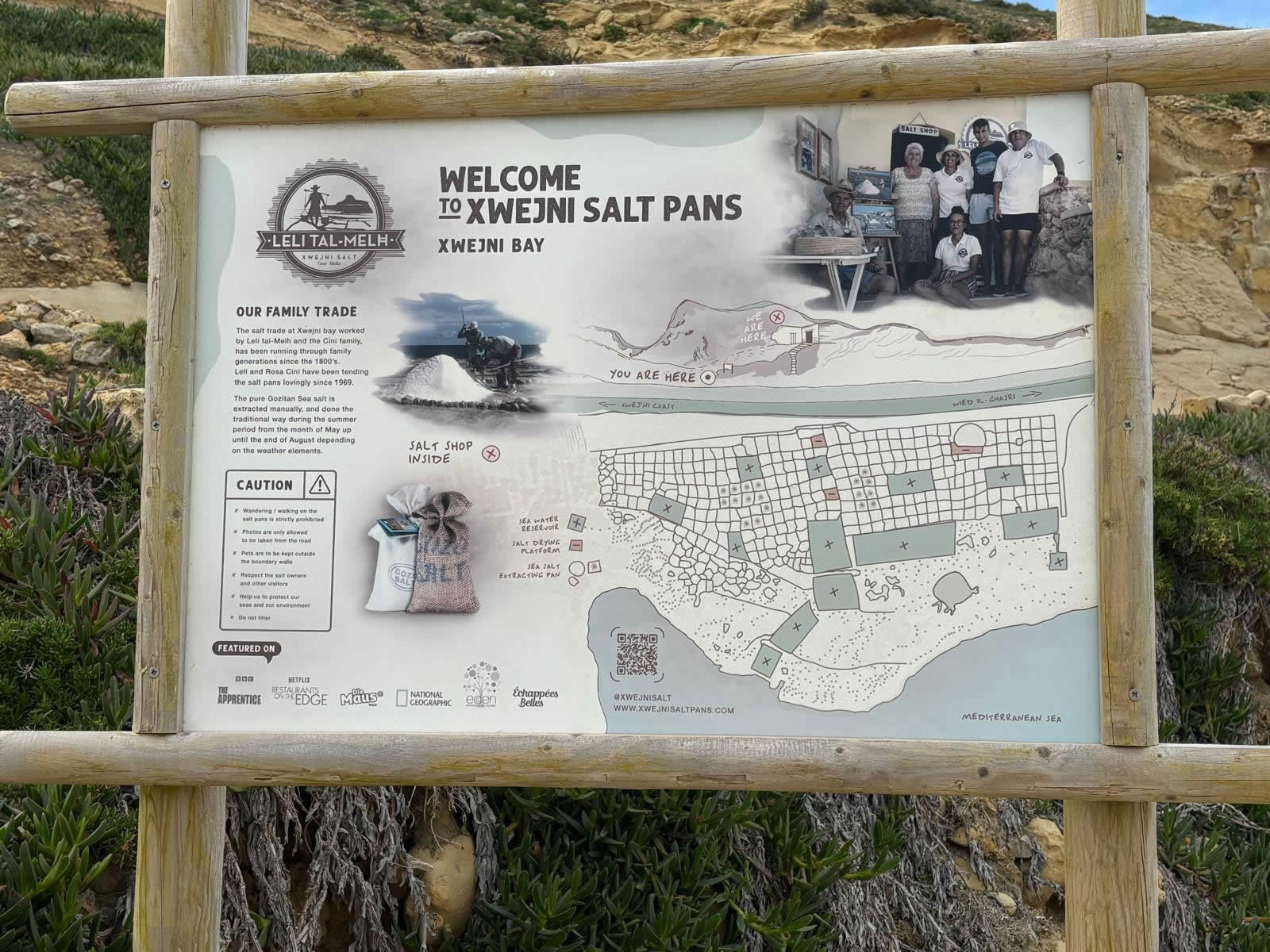
The Xwejni Salt Pans are a network of coastal rock salt pans located in Xwejni Bay, close to the seaside village of Marsalforn on the island of Gozo. These salt pans are part of Malta’s long history of traditional sea salt harvesting — a practice that has shaped the island’s coastal landscapes and local culture for centuries.
Geography and Formation
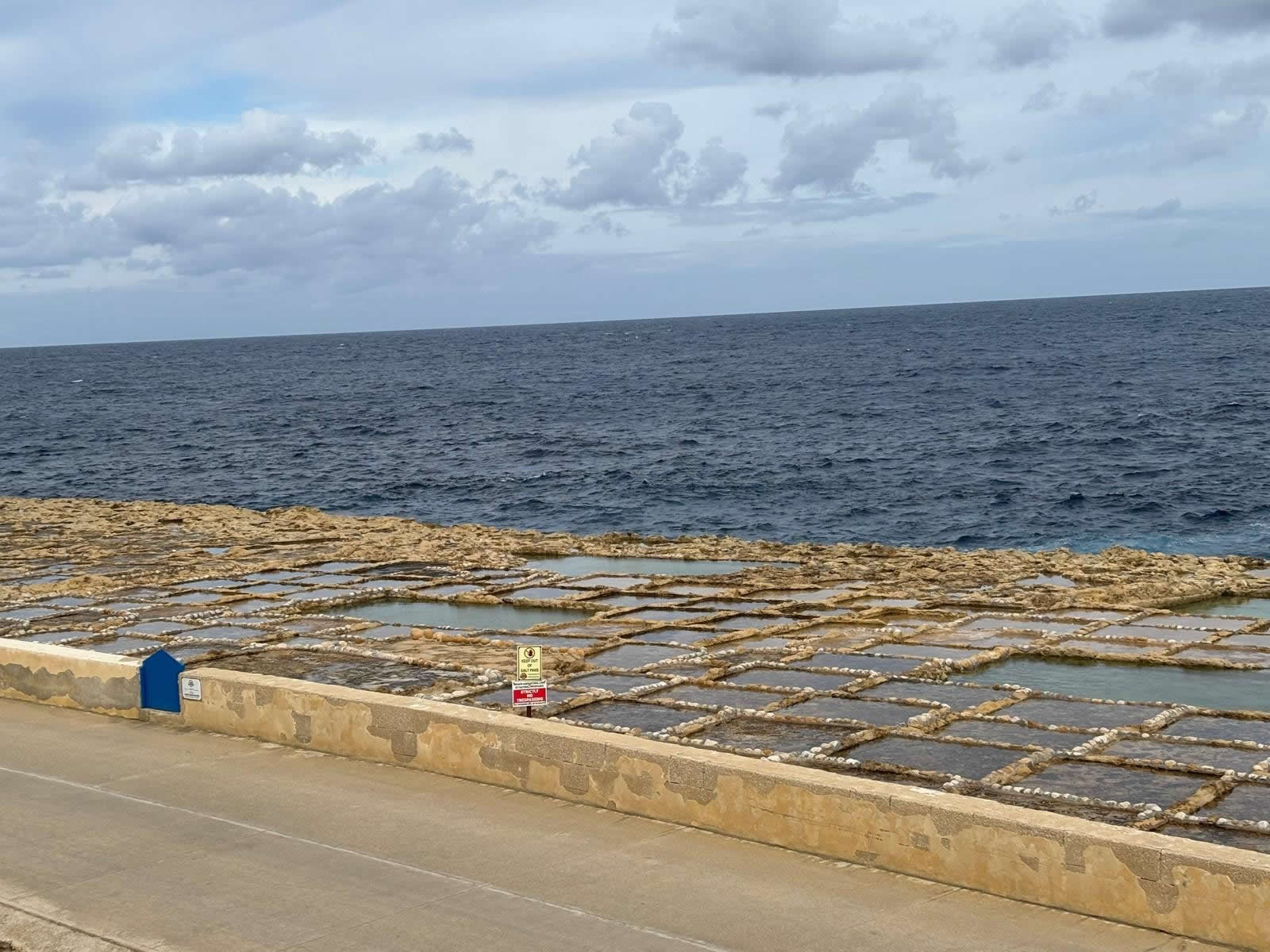
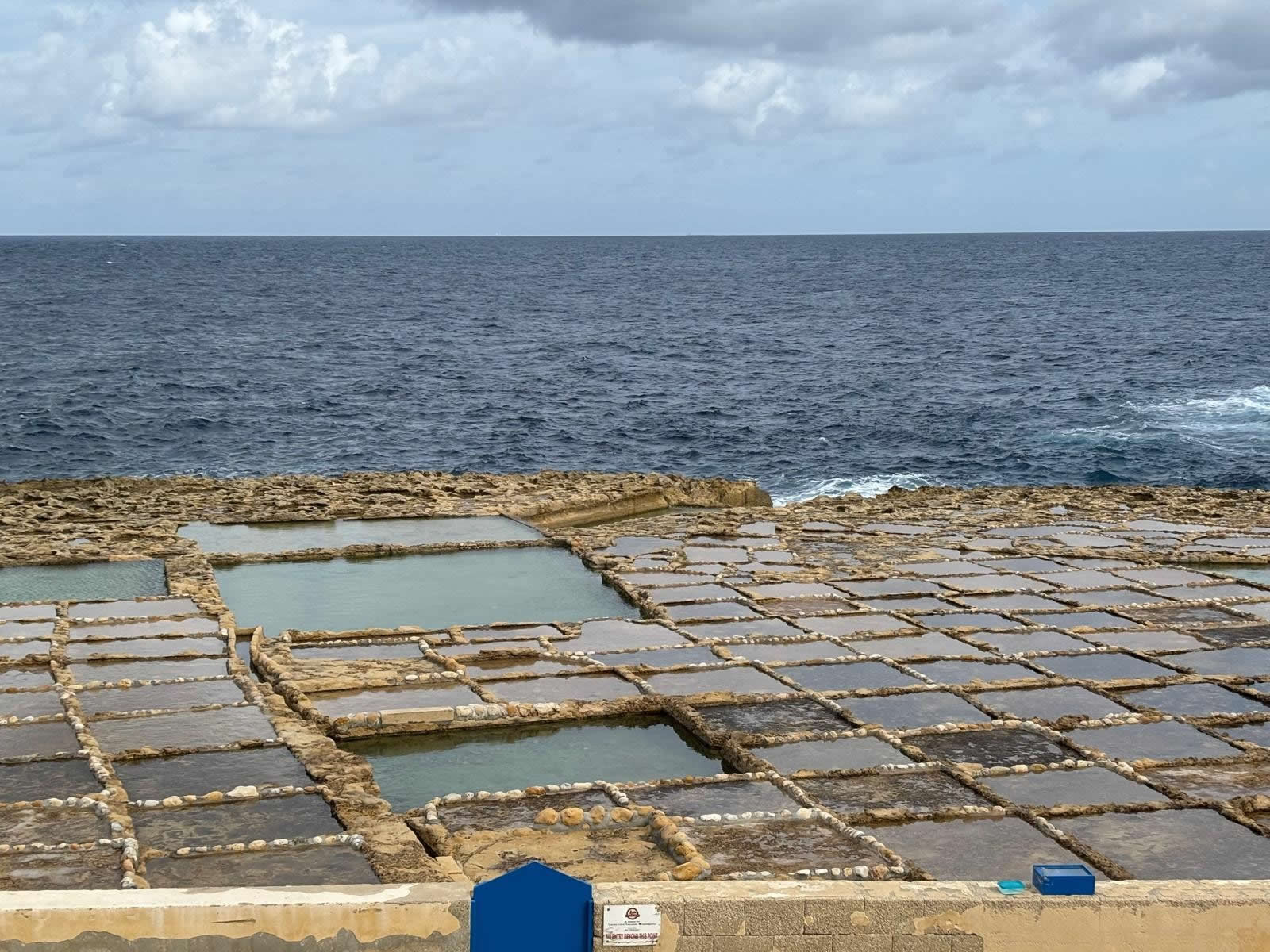
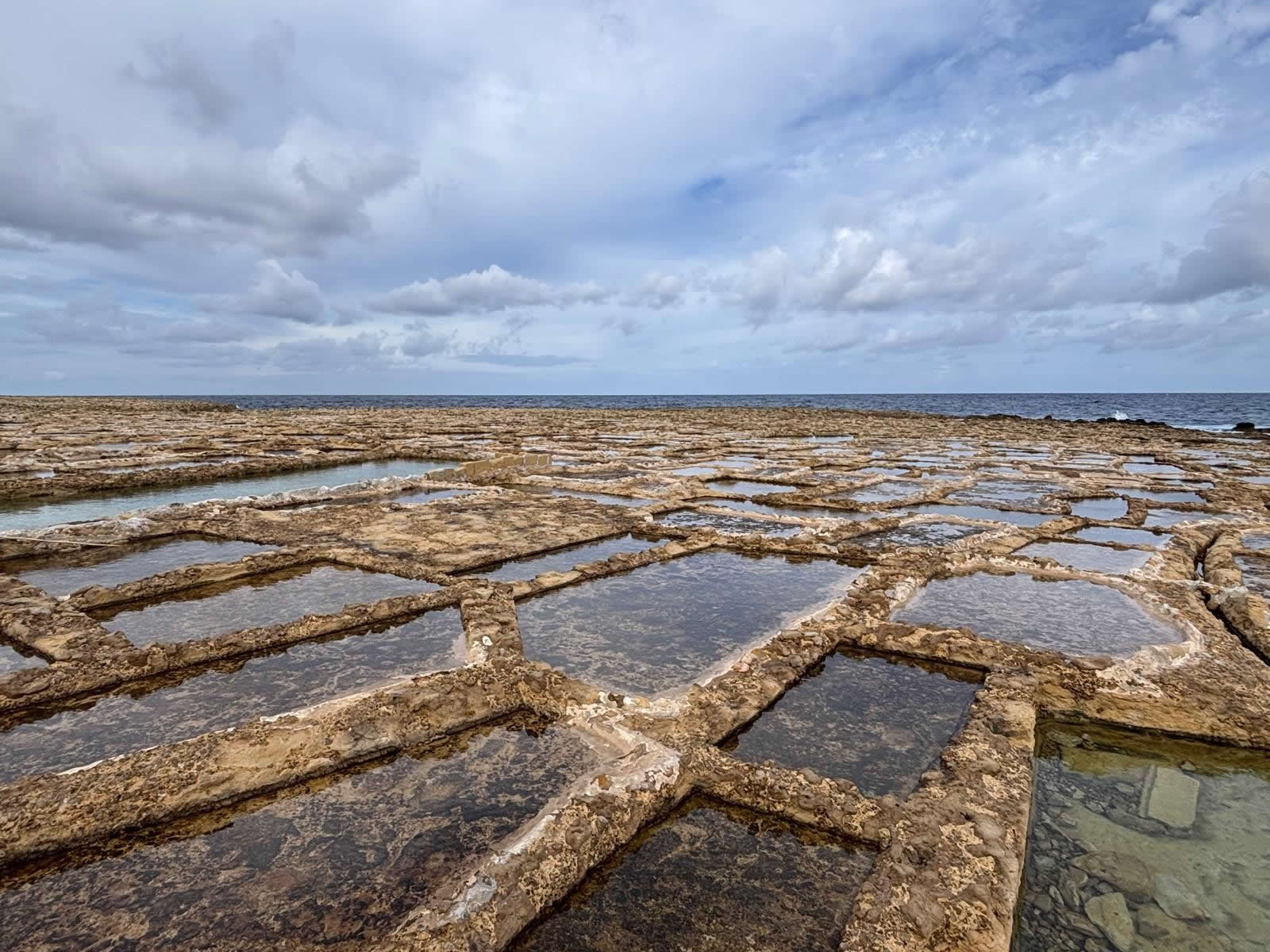
Xwejni Bay forms a shallow, rocky coastal platform where natural depressions in the limestone have been adapted into salt pans. The flat surface, gently sloping towards the sea, allows seawater to flood into shallow basins where it evaporates under the strong Mediterranean sun, leaving behind crystallised salt crystals.
Over time, local salt farmers have expanded and maintained these pans, cutting and shaping the limestone to increase pan capacity and optimise salt production.
Historical Background
Salt has been harvested around the Maltese islands for centuries, dating back to at least the medieval period. The Xwejni Salt Pans were part of this age-old tradition, serving both local communities and periods of commercial salt collection.
Historically, salt was a valuable commodity used for food preservation, seasoning, and trade. Gozo’s salt pans, including Xwejni, formed part of a wider network that helped support rural economies before modern refrigeration.
Traditional Salt Harvesting
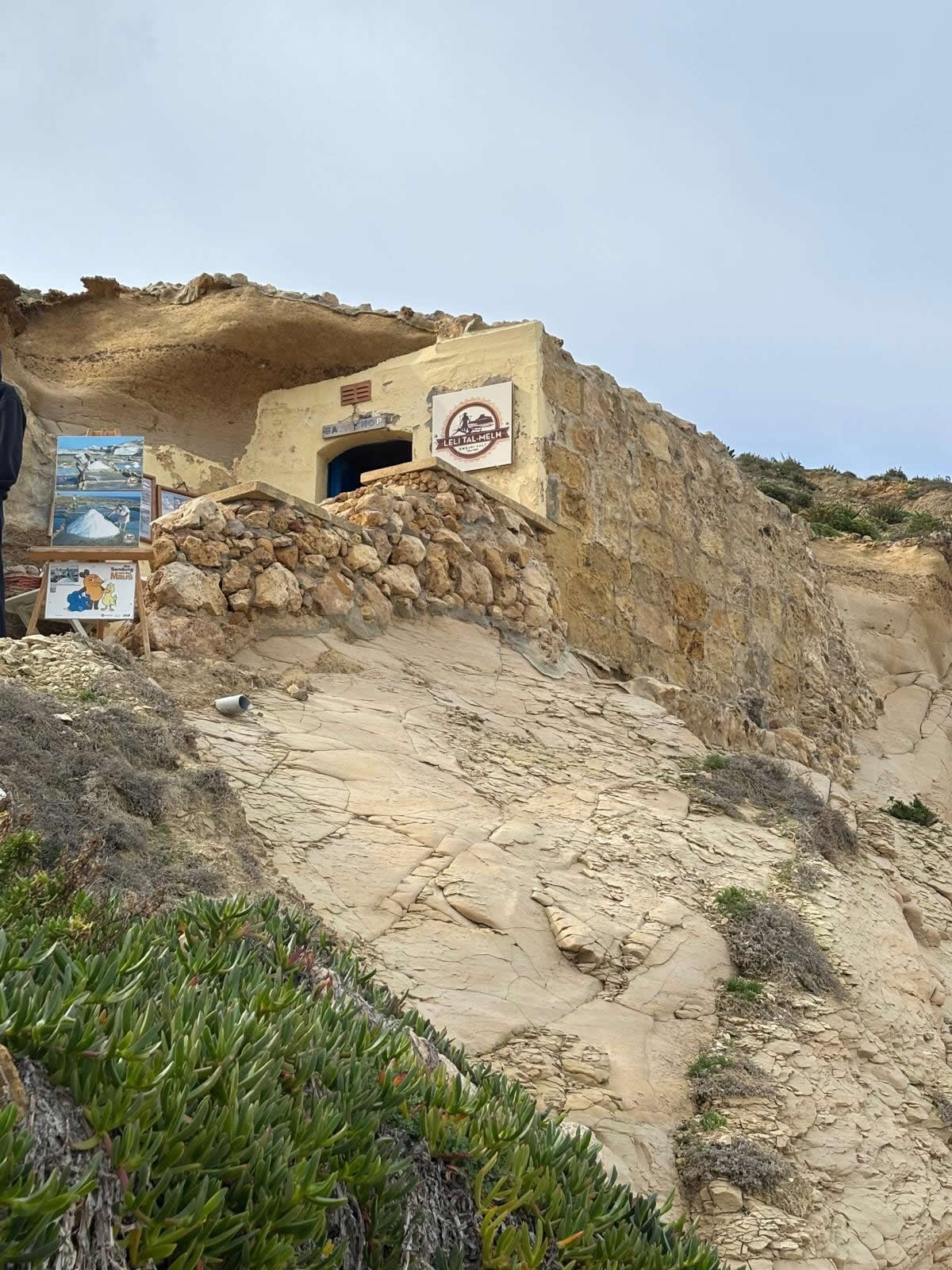
Traditional salt harvesting at Xwejni Bay follows techniques passed down through generations. During the summer months, seawater is allowed to fill the pans at high tide. As the water slowly evaporates under sunny skies, salt concentrates and eventually crystallises in the shallow basins.
Once the salt crystals have formed, farmers rake them into piles and collect them manually, often using specially designed wooden tools. The harvested salt is then washed and dried before storage and use.
Ecological and Cultural Importance
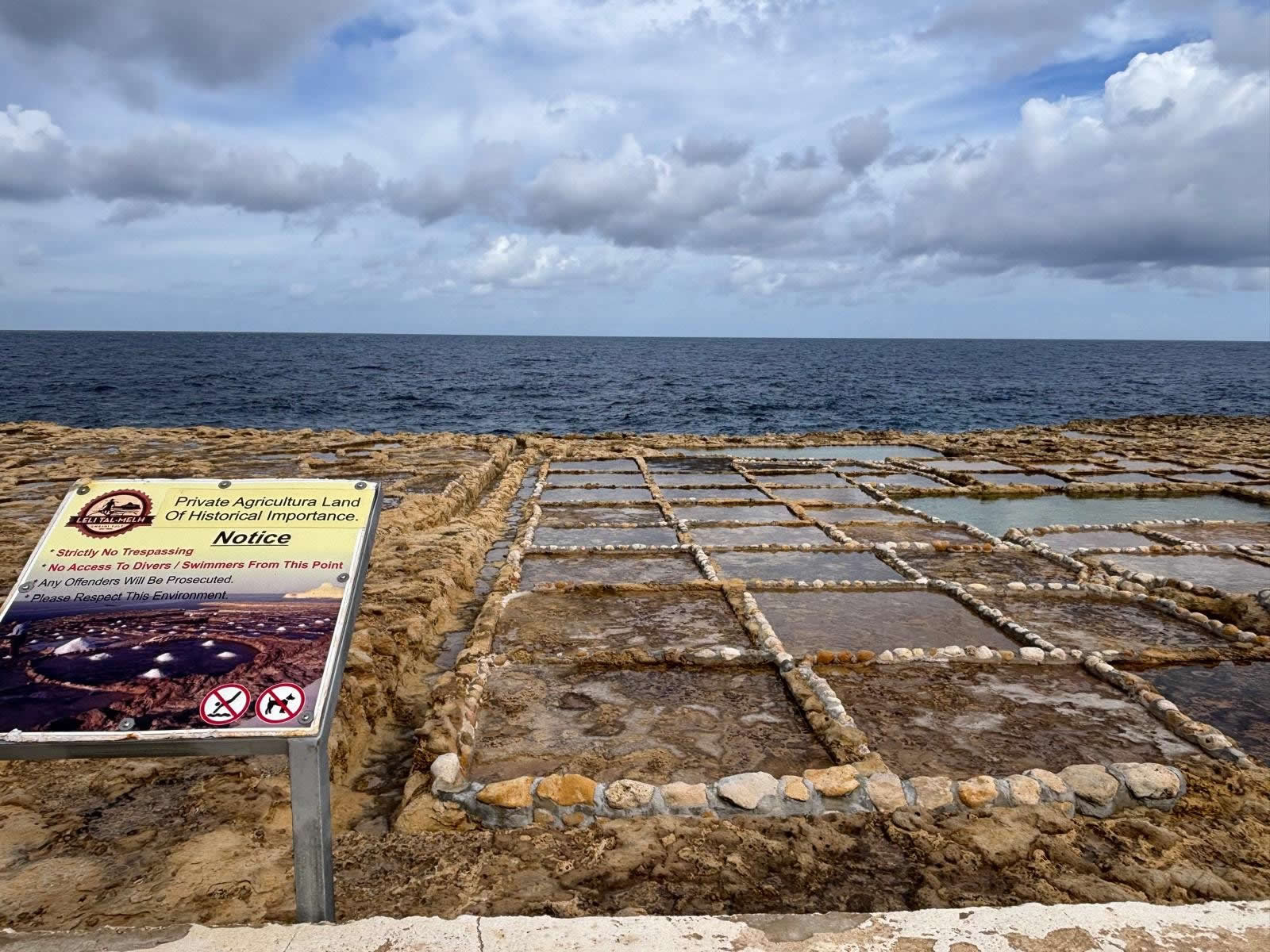
Beyond its economic value, the Xwejni Salt Pans are significant as examples of traditional interaction between humans and the coastal environment. The pans provide shallow microhabitats for specialised invertebrates and marine plants, contributing to local biodiversity.
The pans also stand as cultural landmarks, illustrating the balance between sustainable resource use and natural coastal processes in Gozo’s heritage.
Visiting Xwejni Salt Pans
Xwejni Salt Pans are easily accessible from walking paths around Xwejni Bay and Marsalforn. Visitors can explore the pans safely by foot and enjoy panoramic views over the bay. The area is popular for swimming, cliff walks, and sunset photography.
As the site is natural and often uneven underfoot, good walking shoes are recommended. Visitors are also asked to respect the environment and avoid disturbing salt pan structures that may still be in traditional use.